
One of the first things we want our dogs to learn is where their bathroom is located. Or, perhaps more importantly, that their bathroom is not all over the place inside our house.
Luckily for us, potty training is a skill that dogs of any age can learn! However, good communication is a two-way street.
If your dog has the ability to let you know when he needs to relieve himself, you can prevent the vast majority of indoor potty accidents. Bell training is a great way for your dog to communicate with you so you’ll know when he needs to go outside.
Fortunately, this skill is not a difficult one for dogs to learn.
Here, we will go over what bell training is all about, talk about some of our favorite potty bells, and break down how to teach your dog this handy method of communication so your home can be accident-free.
Bell Training for Dogs: Key Takeaways
- Bell training involves teaching your dog to sound a bell (or string of bells) whenever he needs to go to the bathroom. This will let you know that you need to grab his leash and take him outside.
- Bell-training provides a number of benefits to you and your pooch. Not only will it improve dog-owner communication and help prevent accidents, the training process will help strengthen the bond between you and your dog too.
- It isn’t terribly difficult to bell-train your dog. You’ll simply need to break the skill down into small steps, which we walk you through from beginning to end. We’ll also share some dos and don’ts, so you’ll be able to avoid common mistakes owners make.
What Is Bell Training for Dogs?
Bell training involves teaching your dog to ring a bell when he needs to poop or pee.
It is a wonderful way to circumvent the long-suffering stares, prevent your dog from scratching up your doors, and of course, keep your dog’s bodily functions off your floors.
Bell training is essentially a type of target training, in which you’ll teach your dog to use a part of his body to interact with something in his world.
Target training is used by many animal trainers and keepers to teach all sorts of behaviors, from the simple to the very complex.
We’ll walk you through the whole process in just a moment.
The Benefits of Bell Training Your Dog
When potty-training your pup, the day he finally heads for the door, makes it outside, and potties in the desired spot is a day for celebration!
An important but unsung hero in this happy scenario is you, because if you didn’t notice your pup’s signals that he needs to go, you probably would have found a potty puddle next to the door instead.
But bells make it even easier to keep tabs on your terrier’s need to tinkle! Bell training lets your dog tell you — loudly and unquestionably — that he needs to answer nature’s call.
It’s also important to note that bell training utilizes positive reinforcement training techniques. This makes it wonderful for helping your pooch learn and improving your relationship with him at the same time.
Also, because some dogs are uneasy about heading outside to do their business, the positive reinforcement associated with bell training can improve their feelings of confidence regarding going outside and potty training in general.
What You Need to Bell Train Your Dog
So, does bell training sound like just what you’ve been needing in your life? Let’s make sure you have everything you need to get started on the right paw:
- A potty bell
- Some small, tasty, high-value treats
- A treat pouch
- A clicker, if you are clicker training your dog
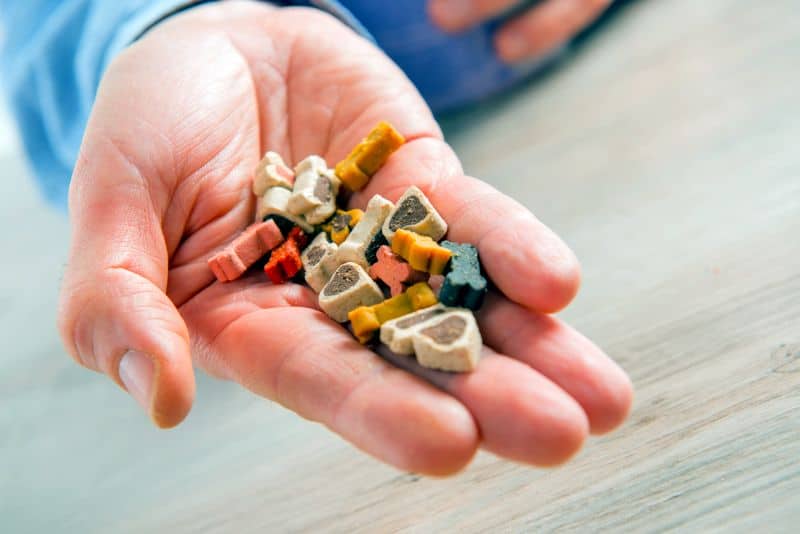
Also, make sure your dog is in a good frame of mind for learning before starting a session, and prepare to do one or two five-minute sessions a day to practice learning this skill.
But for this training to come quick and easy to your dog, you’ve got to get him on board and just as excited to learn as you are to train.
If your pup is too wound up to focus, seems uninterested, or needs to go potty, try to get those distractions out of the way with a bit more exercise, more valuable (to the dog) treats, or a potty break before starting to train.
One of my favorite times to train is right before my dog’s mealtime – he is usually quite interested in what I’m up to around then!
Above all else, just remember to keep your training sessions short, sweet, and fun, and always end them with a meal or favorite game.
How to Bell Train Your Dog: A Step-by-Step Plan
You will go through 3 phases while bell-training your dog: target training, bell introduction, and bell/door pairing.
Phase 1: Target Training
In order for your dog to make those potty bells jingle, he has to make contact with them, so the first part of this training is all about teaching him to touch something on cue.
Since your hands are always handy, we will go over how to teach hand targeting here.
Once your dog understands how to target your hand, getting him to target his potty bells (or any other object you’d like your dog to touch) is much easier. If you’d rather teach using a target stick or other target object, just substitute that in whenever I say “hand.”
Start by giving your dog a few “freebie” treats. Click (or mark verbally), then give him a treat three to five times fairly quickly to get him excited about learning.
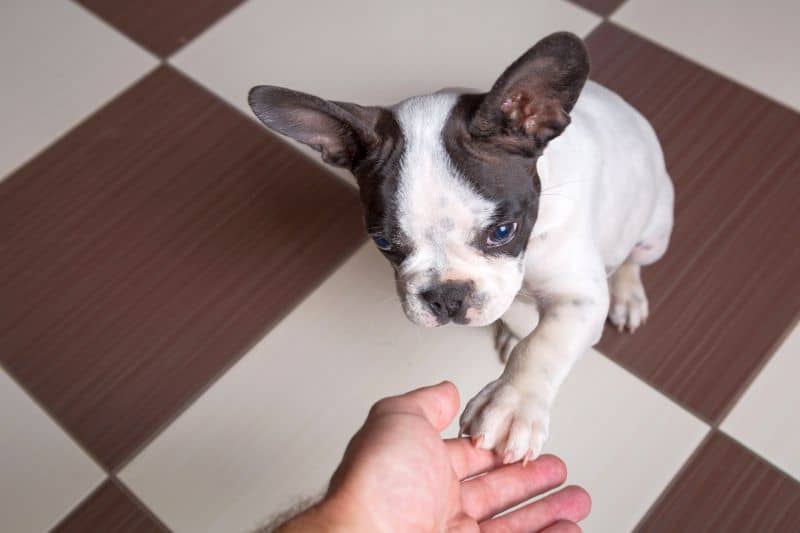
Then, hold your flat hand out to him a few inches from his nose with your palm facing him and your fingers pointing down.
Your next step will depend on what your doggo does:
- If he turns his head toward your hand to sniff it and makes contact with any part of your hand, click the clicker and toss a treat on the ground as soon as you feel his nose.
- If he sniffs near your hand but doesn’t make contact, rub one of the treats on your palm, and try offering your hand to him again.
- If he’s still not interested enough to touch your hand on his own, try holding a treat between your thumb and your palm, or put the treat between a couple of your fingers.
If your dog isn’t easily making contact with your hand using his nose, do not boop him on the nose by moving your hand to make that contact happen yourself. If your dog doesn’t like being booped, he may decide your treats aren’t worth it, and he may leave to find something less boopy to do by himself.
You’ve successfully completed this step once your doggo will repeatedly touch your hand with his snoot. For good measure, repeat this step five to eight times to be before moving on.
It’s Time to Move It, Move It!
Once your doggo is doing well at the previous step, you’ll want to add some movement to the skill.
Start to toss your reward treat far enough from Fido that he has to stand up and take a step or two away from you to find and eat the treat. Offer your hand target again as he is moving toward you, click when he makes contact, then toss his reward treat a short distance away again.
If you want to make this phase even more consistent, you can add movement of your body too. Start by standing up, and make sure your dog is OK touching your hand target while you are in a standing position.
Then, when you’ve offered your hand for him to touch but he hasn’t touched it yet, take one step back, bringing your target hand with you.
If he moves toward you and touches your hand, click and treat! This will teach your dog to pursue the target even if it is moving away from him a bit.
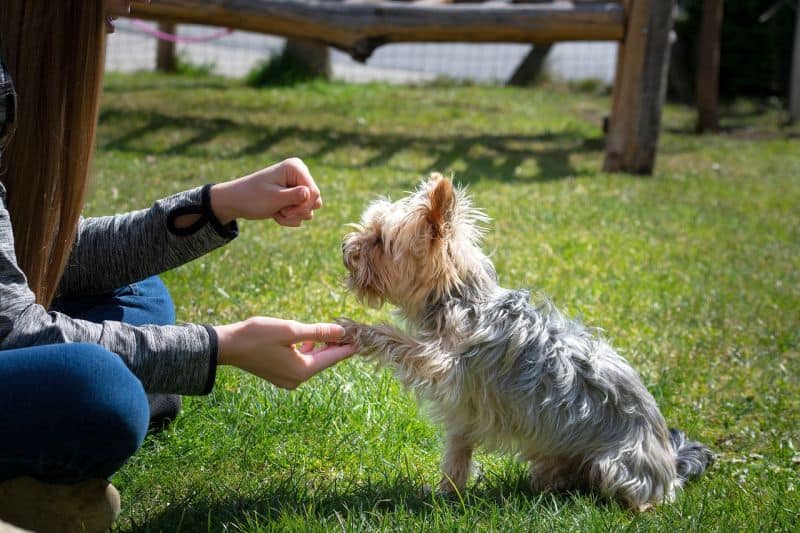
Extra-Handy Options
Adding a verbal cue at this point is useful, as it’ll help during those times he can’t see your visual cues. Just wait to do so until you’re 80% sure your dog will make contact with your hand every time you offer it to him.
Then, say your cue word (“Touch!”) just before you hold your hand out to your pooch. Keep clicking and rewarding for success.
Keep in mind that practicing your hand target in lots of different places and near many unique distractions will be necessary before he will be good at doing it everywhere you go.
Phase 2: Introducing the Bell
There are actually two things you’ll need to do for this phase of bell training: assessing your dog’s comfort level with the bell and teaching him to ring it.
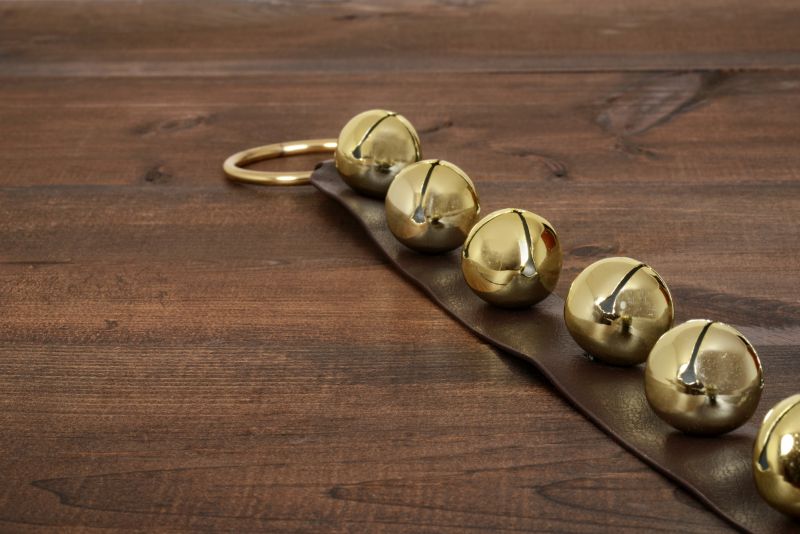
Assessing Your Dog’s Comfort with the Bell
Before you can teach your dog to sound the bell when nature calls, first you need to assess his level of comfort with the bell — some dogs are initially frightened by the sounds that their potty bells make.
Start by taking a moment to think about your dog.
Is he a rough-and-tumble, ready-for-anything, happy-go-lucky pooch?
Or is he normally shy and reserved, and possibly easily startled by unfamiliar sounds?
If your buddy falls into the second category, consider muffling your potty bell before you initially introduce him to it. If your dog decides he is scared of your potty bell right off the bat, you’ve got an uphill journey of “counter-conditioning” the bell’s sound before your pal will be brave enough to make it jingle on his own.
If you want to check on your dog’s reaction to the bell’s sound before you start training sessions, quietly jingle it behind your back across the room from your pooch while he’s eating a meal.
If he ignores the sound, or glances at you but goes right back to eating, he will probably be OK with it. If he responds with a big startle, looks around for a while before going back to eating, or runs away, muffling your bells to start with is a great idea.
Wrapping the bells with some cloth and/or tape before your first session should help prevent fear and keep him excited about learning.
Gradually unmuffle the bells as you and your pup use them during training sessions until your dog is using them at their normal volume (it may take a few days or weeks for some fearful dogs to be OK with the normal sound the potty bells make).
If your doggo starts to show fearful or avoidant behavior around the bells, rewrap them and unmuffle them as slowly as your dog needs.
Teaching Your Dog to Ring the Bell
When your dog is ready to interact with the potty bells without fear, start your training session by doing a few hand targets to warm him up. Then, hold the bells up near your dog.
If his nose makes contact with the potty bell, click and treat.
If he doesn’t make contact after a couple tries or isn’t making contact often, hold your hand target out behind the bells, so your dog will have to touch the bells as he tries to make contact with your hand.
When your dog makes contact with the bells, click and treat. He doesn’t need to make the bells ring loudly at first — a light touch is fine.
If he is still a bit uneasy about interacting with the bells, grab a “lure treat” and hold it under your thumb or between the fingers of your target hand.
You can hold a lure treat during practice as long as your dog needs it there to feel motivated, just remember to start giving him a treat from your treat pouch instead of your lure treat as soon as possible.
Completely fade holding a treat in your target hand when your dog is able to succeed without it being there.
“Action!” – Adding a Cue
As your dog gets better at sounding the bells, you can start to add a verbal cue (“Jingle!”) before you hold the bells out or offer your hand for your dog to target near the bells.
Adding a bit of movement is a good idea for this step too. Start to toss your reward treat a little distance from you so your dog is moving a few steps in your direction in order to make contact with the bells as you hold them.
The goal for this phase is that your dog will willingly and easily make contact with the bells using your verbal cue or your non-verbal hand target cue. Once he’s about 80% consistent with this, you’re ready to try the last phase of bell training.
Phase 3: Potty Bell Jingle = Go Outside for Potty Time
This phase is all about getting your dog better at making contact with the potty bells when they are located next to the door that he will be using to go outside for potty time.
Hang or position the bells near the door at a height that is easy for your dog to make contact with, and start to have training sessions with the bells located there.
During your training sessions, continue to give the cue you’ve established, either verbal or non-verbal, and click and reward when your dog successfully makes contact with the bells.
When it’s time to go outside for a potty break, start to encourage him to jingle the bells after attaching your leash but before you go through the door. This way, you can get outside as quickly as possible after a successful jingle.
If your pooch can’t or won’t take your cue when he’s in a hurry to get outside, don’t worry. Jingle the bells a little yourself before opening the door to take your dog outside if he won’t jingle the bells on his own yet.
Keep doing your short practice sessions until he is able to easily jingle the bells before you both go through the door for potty breaks.
This phase is important because your dog now has the opportunity to use the bells for their intended purpose. Your prompt action is required in order for him to understand that the trips outside to use the restroom can be his idea.
Anytime your dog sounds the bells, be ready to grab your treats and leash (keeping them somewhere close to the door helps) and get your pooch outside as quickly as possible.
Walk with him to his potty area and stand quietly for about five minutes, ignoring any attempts your dog may make to engage you in playtime outside.
If your dog doesn’t go potty quickly – say within five minutes, walk him back inside and keep an eye on him, just in case it wasn’t a false alarm after all.
If your dog does use the restroom while you’re waiting outside, click or mark as he finishes and give him a treat. Then, it’s playtime for a job well done!
Playing with your dog after a successful potty trip is a powerful reinforcer, and it helps build the habit in your dog that when they go outside, potty time happens first, and playtime happens second.
Bell Training Your Dog: Quick Tips
Now that you understand how to teach your dog to use potty bells, we can share a few dos and don’ts to make things easier!

Dog Bell Training FAQs
Bell training is pretty simple, but it still sparks a number of questions among owners. We’ll try to answer some of the most common bell-training questions below.
At what age can you bell train a dog?
As soon as your dog can walk through the house he can start bell training!
Young puppies will not be able to stay focused for long training sessions, but occasionally incorporating the potty bells’ sound into their games (i.e.: just before heading outside for a potty break) is a good way to help them feel happy about the sound the bells make.
It’s also never too late to bell train a dog – even older or deaf dogs can be taught to ring the bells, since all they know about the bells is that they have to make contact with them to earn a treat!
How do I train my dog to tell me when he needs to go outside?
Bell training is an excellent way for your dog to alert you that he needs to go outside for a potty break. Just follow the steps discussed above and you’ll be well on your way!
Is it hard to bell train a dog?
Most dogs can learn the basics of bell training during a few short daily training sessions.
Once your dog knows that the bells mean a trip outside, he will be quite relieved to find out he just learned an easier way to ask you to let him out!
Why is my dog scared of potty bells?
Some dogs are naturally more timid of sudden, loud sounds than others. That’s part of the reason we encourage owners to test their dog’s reaction to the bells at the outset.
If your dog seems frightened by the bells, muffle them a bit at first. Over time, you can slowly remove the muffling to allow the bells to ring.
Can you make your own dog potty bells?
Anyone with some bells and a string can make potty bells, but they need to withstand plenty of wear and tear. Well-made bells can prevent potty accidents caused by miscommunication due to broken potty bells.
Why does my dog ring his potty bells all the time?
Your dog may frequently ring his potty bells because he likes what happens when he does it! He may love the attention from you, the trip outside, and the happy feelings and treats involved with bell training.
To help get his focus back on the task at hand, whenever he rings his bell, grab his leash, walk him outside directly to a potty area in the yard, and stand quietly like a tree for 5 minutes. Do not respond to his attempts to play with you.
If he goes potty, give him a treat and let him play for a few minutes before going back inside. If he doesn’t potty after 5 minutes, calmly walk him back inside and keep an eye on him to make sure you can get him outside if he does need to go to the bathroom after all.
Once he realizes that bells mean business first, then playtime, he should tone down the use of the bells a bit.
***
Does your dog always let you know when he needs to go outside to potty? Do you have a dog that used to be scared of their potty bells? How long did it take you to train your dog to use his potty bells to go outside?
Share your experiences (and any questions you may have) in the comments below!


Any tips/suggestions on introducing bells to a multi dog house? Going to try it for our youngest dog who will only give the “silent stare” – which has led to accidents continuing well past young puppy hood. Can I teach only him to use the bell? or better to use multiple/different bells to train each dog their own signal? I cannot find any articles about potty bells and multiple dog households.
Thanks!
Great question, Megan!
I’m not sure if Andrea will have a chance to weigh in here, but I don’t think there’s anything wrong with only teaching one doggo to use the bells. And personally, if I were interested in training my girls to use bells, I wouldn’t hesitate to use the same bell for both.
Let us know how it goes for ya!